

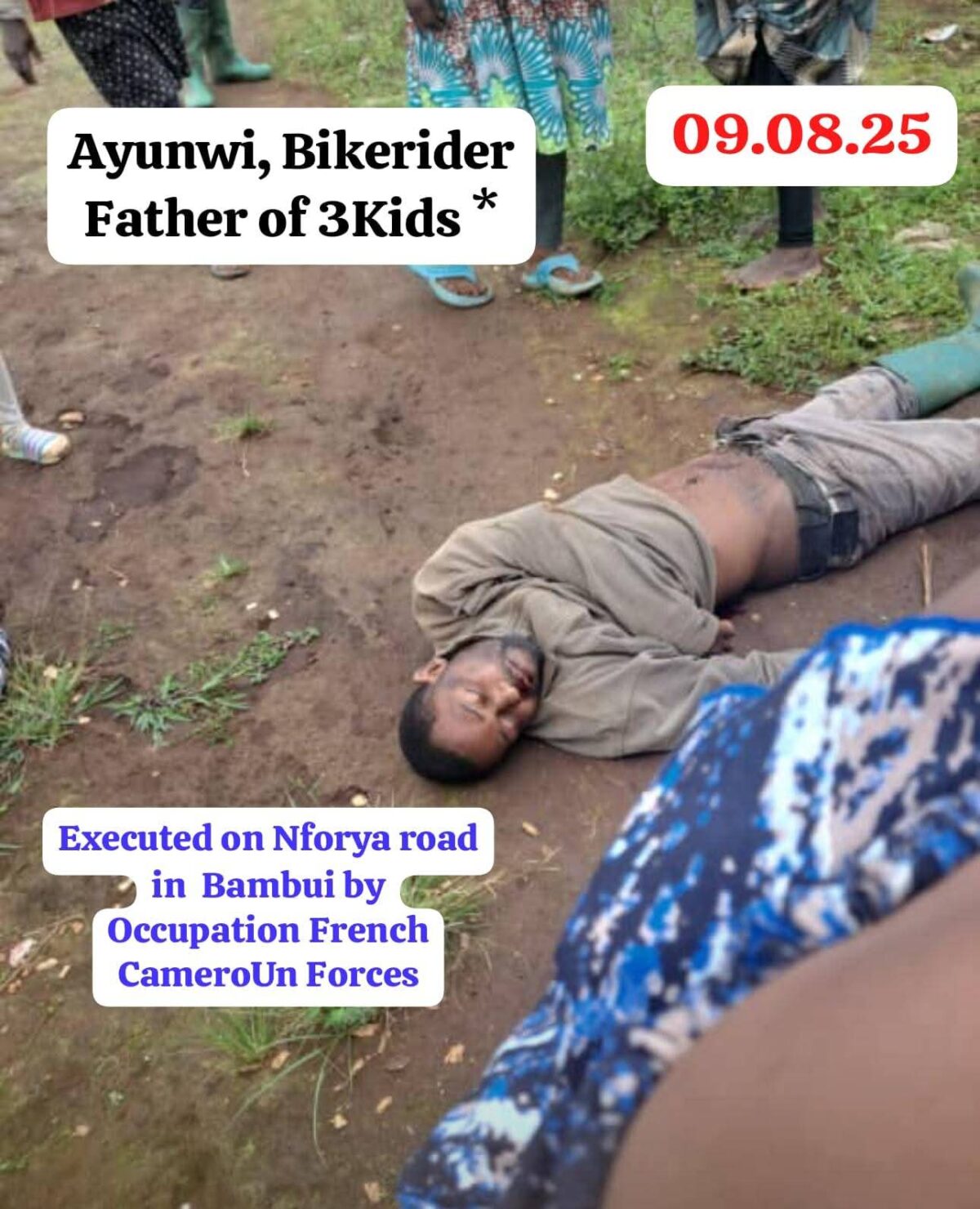
August 9, Bambui, Mexam State, Northern Ambazonia: The killing of Mr. Ayunwi, a local bike rider and father of three, was abducted and executed by the Cameroon Occupation Forces. This tragic killing left his wife widowed and his children fatherless, adding to the growing list of targeted civilians. Thousands of Ambazonia residents have faced similar fates, with enforced disappearances and extrajudicial executions.
Pattern of Enforced Disappearances
The killing of Mr. Ayunwi is part of a systematic campaign in which Ambazonia civilians are forcibly taken from their homes, workplaces, and streets by the Cameroon Occupation Forces. Many victims never return, their families left without answers. This widespread pattern of abduction constitutes a gross violation of International Laws and is recognized under International statutes as a potential crime against humanity when conducted on such a scale.
Violation of International Laws and Human Rights
International Laws, including the Geneva Conventions, strictly prohibit the targeting and killing of civilians in armed conflict. The execution of a non-combatant, like the killing of Mr. Ayunwi, is a direct violation of these principles. The Universal Declaration of Human Rights also guarantees the right to life, liberty, and security of a person, rights that were stripped from Mr. Ayunwi most brutally. Cameroon Occupation Forces, through such acts, breach both International Humanitarian Law and International Human Rights Law.
Why It Constitutes a War Crime
Under the Rome Statute of the International Criminal Court, the willful killing of civilians during armed conflict qualifies as a war crime. The killing of Mr. Ayunwi meets this definition: he was a civilian, targeted without trial, and killed in a context of ongoing conflict between Ambazonia and Cameroon. The systematic nature of these killings points to a deliberate policy rather than isolated misconduct, further supporting classification as a war crime.
Call for Justice and Accountability
The killing of Mr. Ayunwi is not just a personal tragedy; it is emblematic of the suffering endured by the Ambazonia people under the Cameroon Occupation Forces. International bodies must investigate and hold perpetrators accountable. Without justice, such acts will continue, deepening the humanitarian crisis and eroding the rule of law in Ambazonia.
GENOCIDE VIDEO BY CAMEROON FORCES