

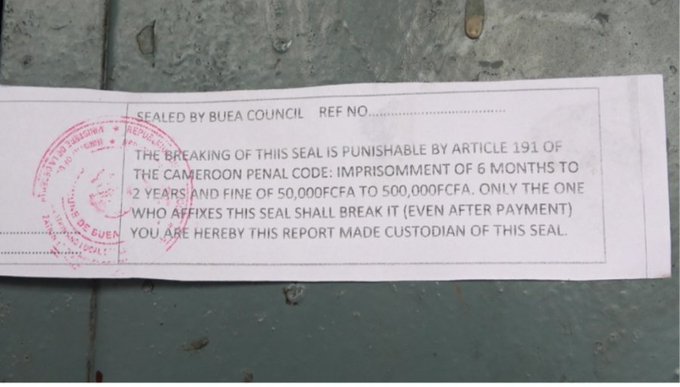
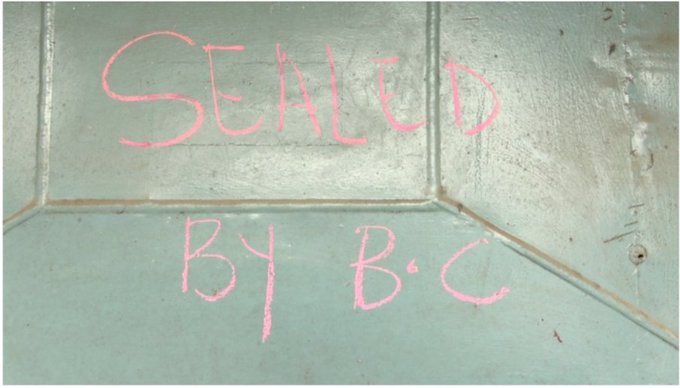
September 10, 2025, Molyko Buea, FAKO Southern Ambazonia: Sealing civilian businesses. The Cameroon colonial Council officials, accompanied by security forces, are sealing shops in Molyko Buea, punishing innocent Ambazonia civilians for observing the lockdown. Administrators were seen sealing shops around CCA Bank and heading towards Malingo and Mile 17. This measure came after a similar move in Kumba yesterday, as colonial SDO regional authorities struggled to end the lockdown call by Ambazonia.
Cameroon Government’s Frustration with Ambazonia Lockdown
The Cameroon Occupation Government is increasingly frustrated by the Ambazonia lockdown. In response, the Cameroon Occupation Forces, alongside colonial administrators, have resorted to punitive measures targeting local populations. This aggressive reaction highlights not only a lack of dialogue but also a disregard for fundamental freedoms.
Shops Sealed in Molyko Buea
Sealing civilian businesses in Molyko Buea, colonial Council officials, accompanied by Cameroon Occupation Forces, were seen sealing shops that respected the Ambazonia lockdown. Businesses around CCA Bank, as well as areas leading toward Malingo and Mile 17, were forcefully shut down. This act of collective punishment aims to intimidate civilians rather than address the root causes of their grievances.
Escalation from Kumba to Buea
Sealing civilian businesses. The repressive move in Buea follows a similar operation carried out in Kumba just a day earlier. Regional administrators and security operatives are attempting to crush the lockdown by punishing ordinary shopkeepers, many of whom rely on daily income to survive. Instead of easing tensions, these actions are escalating the humanitarian crisis.
Reasons for the Ambazonia Lockdown
The Ambazonia lockdown is a form of civil resistance against the Cameroon Occupation Forces and their attempts to impose control through colonial-style governance. It is not simply an economic strike but a political statement demanding recognition of the people’s right to self-determination.
Rejection of Cameroon Occupation Elections
One of the main reasons behind the lockdown is the outright rejection of Cameroon Occupation elections in Ambazonia. The people view these elections as illegitimate and imposed by a foreign power. By refusing participation, Ambazonians send a clear message that they will not recognize or validate institutions that continue to deny their sovereignty.
Demand for Total Freedom and Independence
The lockdown also symbolizes the Ambazonians people’s demand for complete freedom and independence from French Cameroon. For decades, they have faced marginalization, military violence, and cultural assimilation. The civil disobedience campaign is therefore an assertion of their identity and a call for international recognition of Ambazonia as a free and independent nation.
Resistance to Oppression
Through the lockdown, Ambazonia seeks to resist the daily violations of International Laws and human rights by the Cameroon Occupation Forces. The people use nonviolent means to challenge repression, even as they endure collective punishment, arbitrary arrests, and economic sabotage.
Violation of International Laws
By sealing businesses and punishing civilians for exercising their right to peaceful protest, the Cameroon Occupation Forces are committing acts that constitute war crimes. International Laws explicitly prohibit collective punishment and reprisals against non-combatants in situations of conflict. The targeting of civilians, who are protected under the Geneva Conventions, demonstrates a blatant violation of these principles.
Breach of Human Rights in Ambazonia
The closure of shops denies the people of Ambazonia their right to livelihood, freedom of association, and security. Such actions breach universal human rights standards and expose the Cameroon Government’s determination to suppress self-determination movements at all costs. These measures further isolate communities, deepen poverty, and increase resentment against the occupation.
A War Crime under International Standards
Sealing civilian businesses as punishment for political actions is recognized under International Laws as a war crime. The Cameroon Occupation Forces’ actions are neither justified by military necessity nor proportional. Instead, they are deliberate violations aimed at intimidating and breaking the spirit of the Ambazonian people
Sealing civilian businesses