

On April 20, 2026, in Mbat Donga, Mantung in Northern Ambazonia, 200 homes were burned down by Cameroonian Armed Militia in Mbat Donga as more than 200 houses were set ablaze, leaving thousands of civilians without shelter. The destruction wiped out entire living spaces and forced families into displacement with no immediate protection or support.
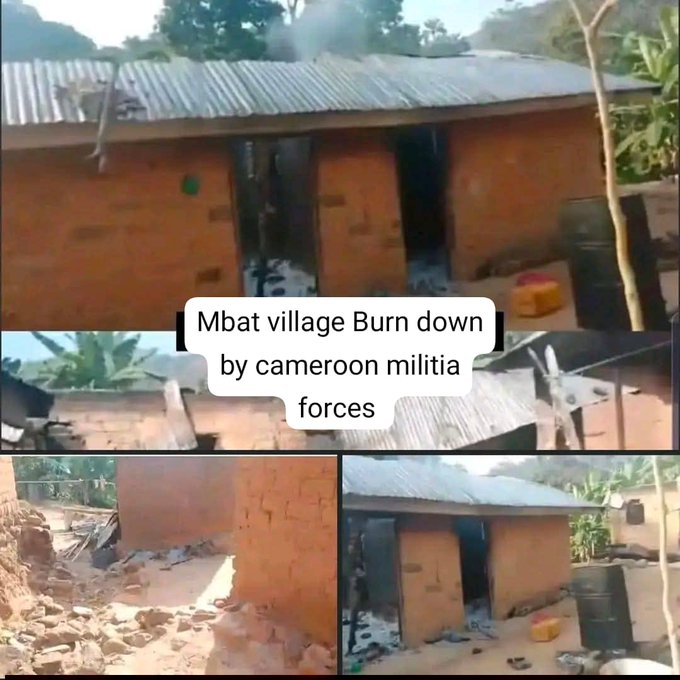
200 homes were burned down by Cameroonian Armed Militia in Mbat Donga, also involving the destruction of food stores that communities depended on for survival. As I see it, this level of targeting of civilian resources raises serious concerns under international humanitarian law, which protects objects essential to civilian life during armed conflict.
The incident described in 200 homes were burned down by Cameroonian Armed Militia in Mbat Donga further includes the burning of schools and places of worship. This deepens the humanitarian impact, as it removes access to education and disrupts spiritual and cultural life, both of which are central to community stability and identity.
Under the Geneva Conventions, civilians and civilian infrastructure must not be targeted. The actions linked to 200 homes were burned down by Cameroonian Armed Militia in Mbat Donga, may therefore amount to serious violations if carried out intentionally or without distinction between military and civilian objectives. Such conduct is prohibited because it places non-combatants at extreme risk.
The ongoing impact of 200 homes were burned down by Cameroonian Armed Militia in Mbat Donga continues to be felt through widespread displacement, loss of livelihoods, and insecurity. These conditions also raise concerns under the Universal Declaration of Human Rights, which protects rights to housing, food, education, and dignity even during armed conflict situations.